
Research Positioning & Ethics

Holding the Tension
Sufi Onto-Ethical Practice in Conversation with Posthuman Thought
Relational Horizons is positioned as a dialogical and exploratory project, not as a framework that explains or evaluates Sufi traditions through posthuman theory. The project begins from the recognition that Sufi onto-ethical practices precede, exceed, and cannot be contained by contemporary theoretical paradigms, including posthumanism.
Posthumanism is therefore not used here as an interpretive lens that subsumes Sufi traditions. Instead, it functions as a critical interlocutor—a contemporary field concerned with decentering the autonomous human subject, questioning mastery, and rethinking relational existence in a technologically and ecologically entangled world.
The project operates at the intersection of:
- Sufi onto-ethical practice as lived tradition
- Posthuman thought as critical discourse
- Digital media as a relational and participatory space
Dialogue, Not Equivalence
While certain resonances can be observed between Sufi thought and posthuman critiques—such as:
- the decentering of the ego
- critiques of human supremacy
- relational understandings of existence
These resonances do not imply equivalence.
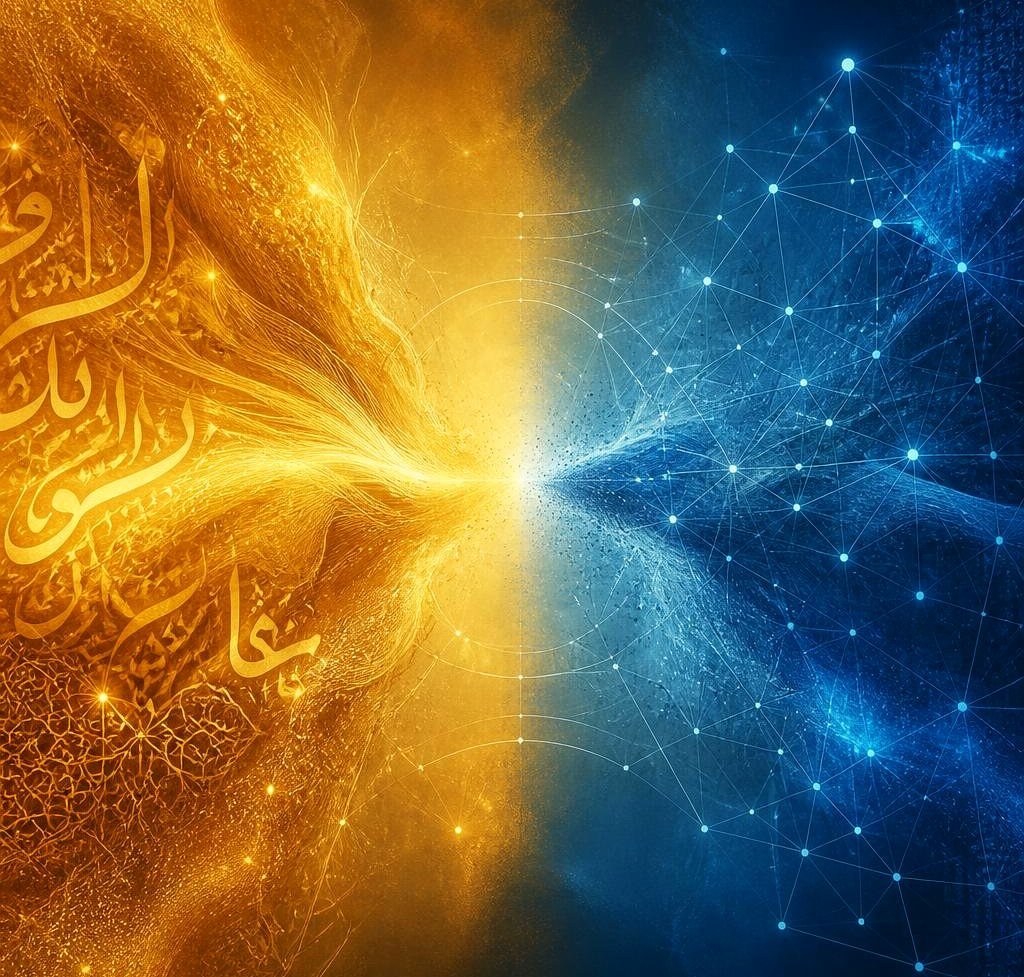
Sufi traditions operate within a vertical ethical and spiritual orientation toward the Divine, whereas much posthuman theory emphasizes horizontal relationality and often rejects transcendence. This difference is not resolved or flattened within the project; it is held open as a productive tension.
Relational Horizons treats this tension as intellectually and ethically generative rather than something to be harmonized.

Against Reduction and Appropriation
This project explicitly resists:
- Reducing Sufi practices to symbolic philosophy
- Translating spiritual disciplines into abstract metaphors
- Treating Sufi knowledge as data, content, or aesthetic material
Sufi traditions are approached here as ways of life, ethical disciplines, and modes of relational becoming, grounded in practice, humility, and responsibility. Any engagement within this space must acknowledge that some dimensions of Sufi experience are not representable, not extractable, and not open to instrumentalization.
The digital gallery does not seek to “explain” Sufism. It seeks to host encounters, reflections, and resonances—while remaining aware of the limits of representation and theory.
On Knowledge and Its Limits
The project acknowledges multiple forms of knowledge:
- discursive and analytical
- experiential and embodied
- ethical and transformative
Some forms of knowing—particularly within Sufi contexts—emerge through practice, discipline, remembrance, and ethical transformation, rather than through observation or explanation alone.
Accordingly, the gallery does not privilege academic language over other forms of expression. Silence, ambiguity, affect, and partial articulation are recognized as legitimate modes of engagement.
An Ongoing Inquiry
Relational Horizons remains deliberately unfinished. Its purpose is not closure but continuation—an ongoing inquiry into how spiritual wisdom, ethical practice, and posthuman critique might coexist in a shared yet carefully held space.
This project is developed as part of the Posthuman Educator Certification Course by the Posthuman Academy. Muhammad Bilal is the principal investigator. AI serves as companion in the research, writing, and development of this gallery.
This project is guided by dialogue, restraint, and ethical attentiveness rather than explanatory authority.